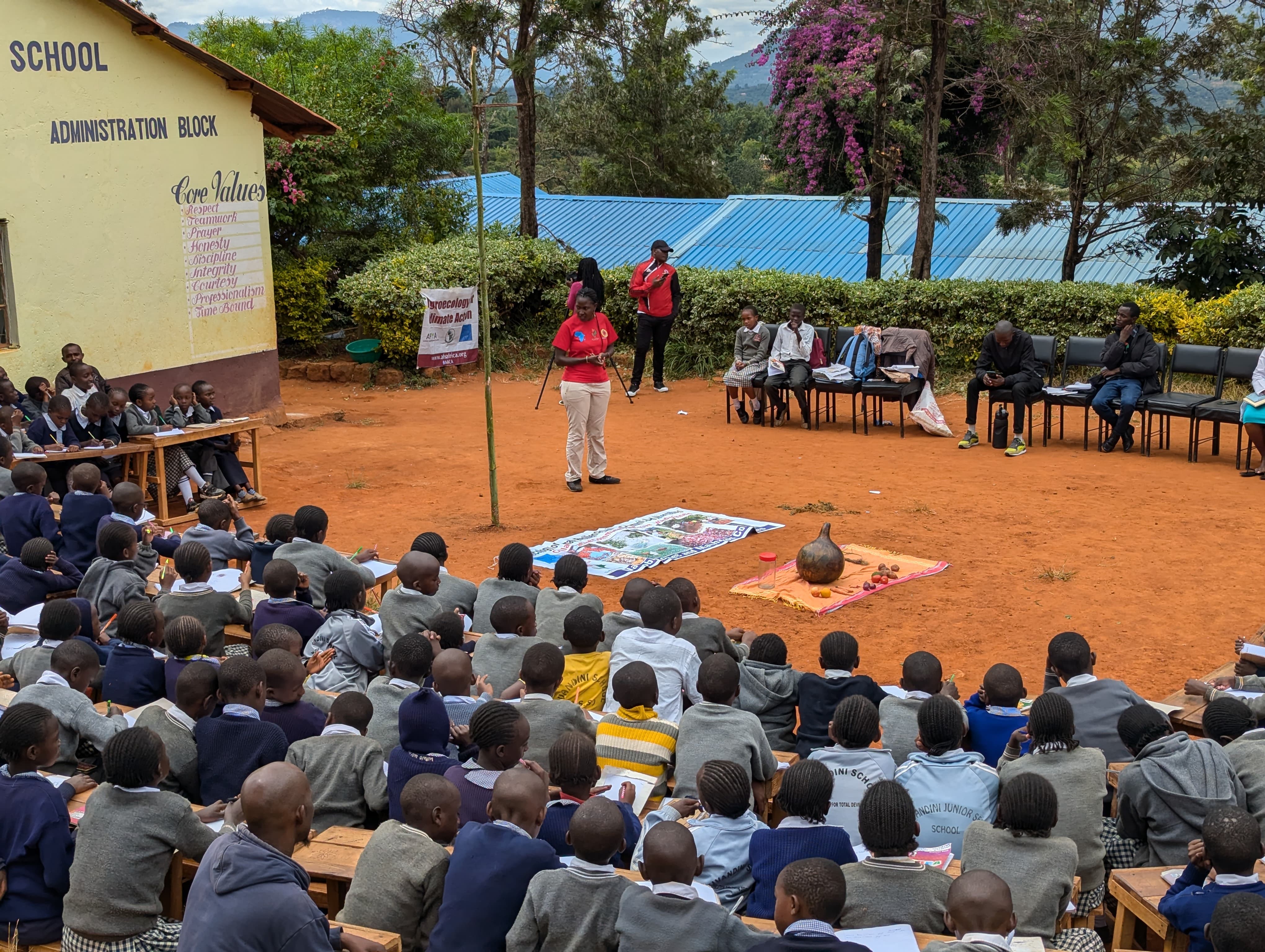
Food security becomes stronger when knowledge, land and household agency grow together.
Safina approaches this work as part of a wider community system. The goal is not a stand-alone activity, but practical capability that can reinforce learning, household resilience, participation and local leadership.
Practical work. Clear pathways.
Kitchen gardens
Practical household food production and climate-resilient growing.
Agroecology learning
Hands-on approaches that connect soil, food, water and local knowledge.
Seed knowledge
Exchange and preservation of locally relevant seed practices.
Demonstration & learning
Visible examples that communities can observe, adapt and discuss.
One programme, many connections.
Food security links directly with women’s economic agency, health, education and climate resilience. Safina therefore treats the homestead as a learning space as well as a production space.
Safina’s organizational records report 200 women equipped with sustainable agriculture skills and support for Sustainable Homesteads through the Pollination Project Foundation.
Questions about sustainable homesteads
What does the work focus on?
Kitchen gardens, agroecology, seed knowledge and practical learning connect food security with climate resilience. Safina works with local priorities and knowledge so approaches can be adapted to a community’s setting.
How does this support women’s empowerment?
Access to growing skills, resources and networks can strengthen household choices and women’s participation. Safina connects this pathway with education, digital learning and local leadership rather than treating food production in isolation.
Can my group collaborate or ask about support?
Yes. Tell Safina where you work, the community need and what you hope to contribute or learn. Programme availability depends on local plans and resources; an enquiry is a starting conversation, not an enrolment promise. Send a Sustainable Homesteads enquiry →
Explore related digital skills and mapping work.
Help this work travel further.
Safina welcomes technical partners, funders, schools, volunteers, researchers and community collaborators.
Enquire about Sustainable Homesteads →